On this page
Stucco water damage repair starts where most other repairs stop: behind the wall. On Cape Coral homes, water usually gets in through a crack, a window corner or the base of the wall, then sits in the block or the lath where you can’t see it. By the time the outside shows stains, soft spots or bubbling paint, the damage has been growing for a while. We open the wall, find the source, dry it, rebuild it and paint it to match, so the leak stops and the wall looks like nothing happened.
One thing to know up front: we repair the stucco wall and what is behind it, meaning the lath, the sheathing and rotted framing on frame walls and additions. If your house has flooded inside, call a water restoration company first to dry out the rooms. Once the house is dry, we fix the outside wall so the water can’t come back the same way.
What are the signs of water damage behind stucco?
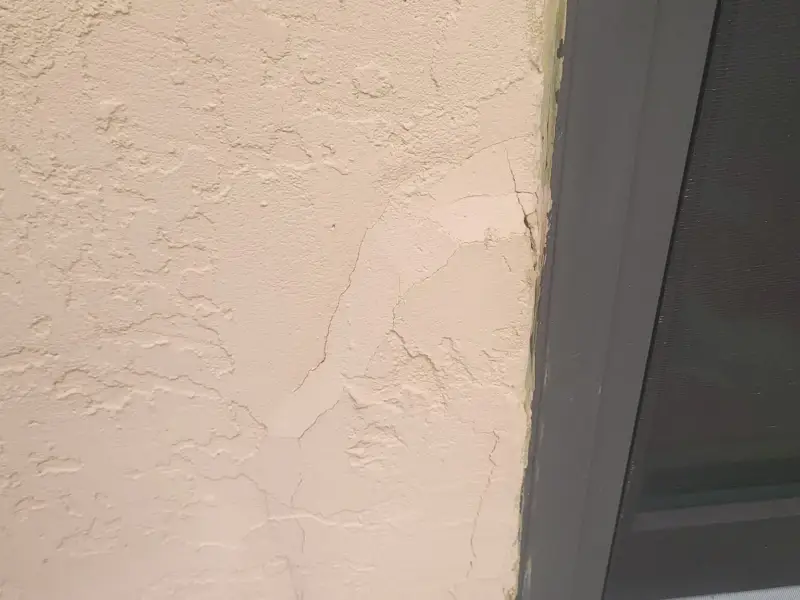
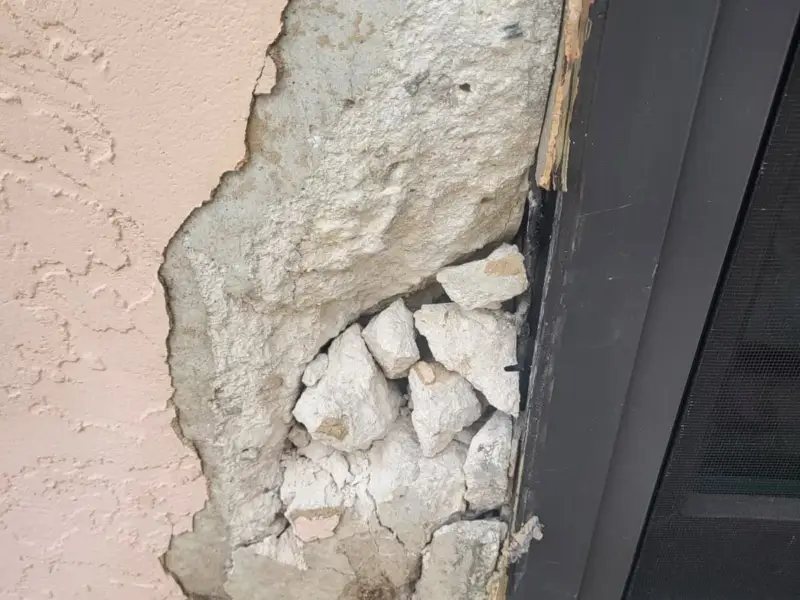
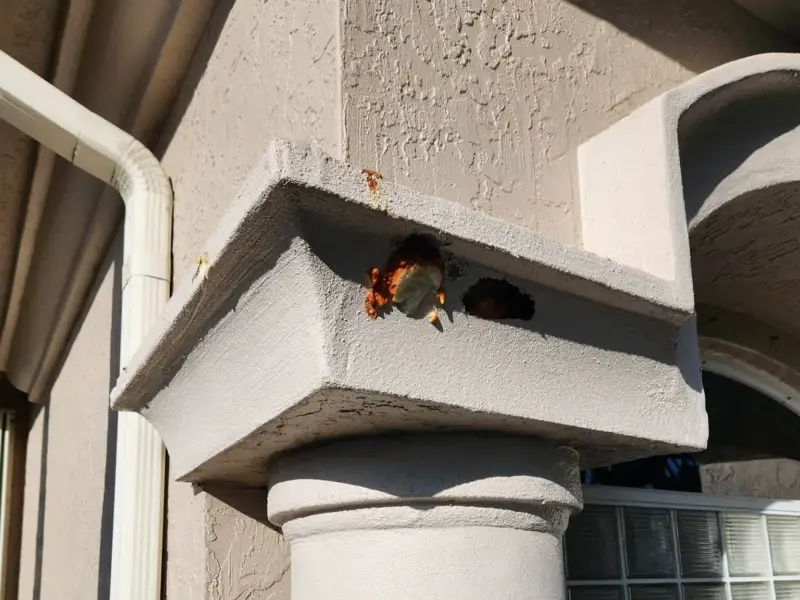
The most common signs are stains that run down from window corners, paint that bubbles or peels after rain, stucco that feels soft or sounds hollow when you tap it, and crumbling stucco along the base of the wall. Inside, look for damp drywall, swollen baseboards or a musty smell on an outside wall.
- Brown or dark streaks below windows, doors or light fixtures.
- Bubbling or peeling paint that comes back after every storm.
- Soft, spongy or hollow-sounding areas when you press or tap the wall.
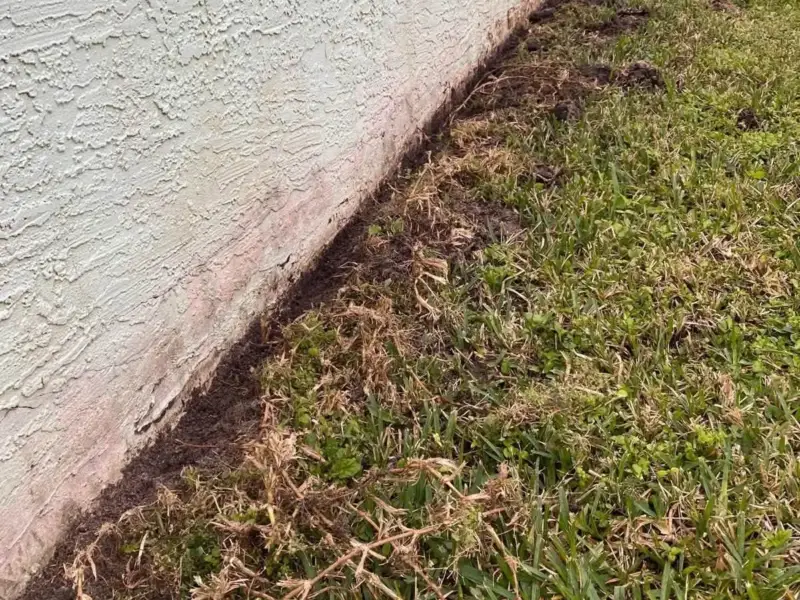
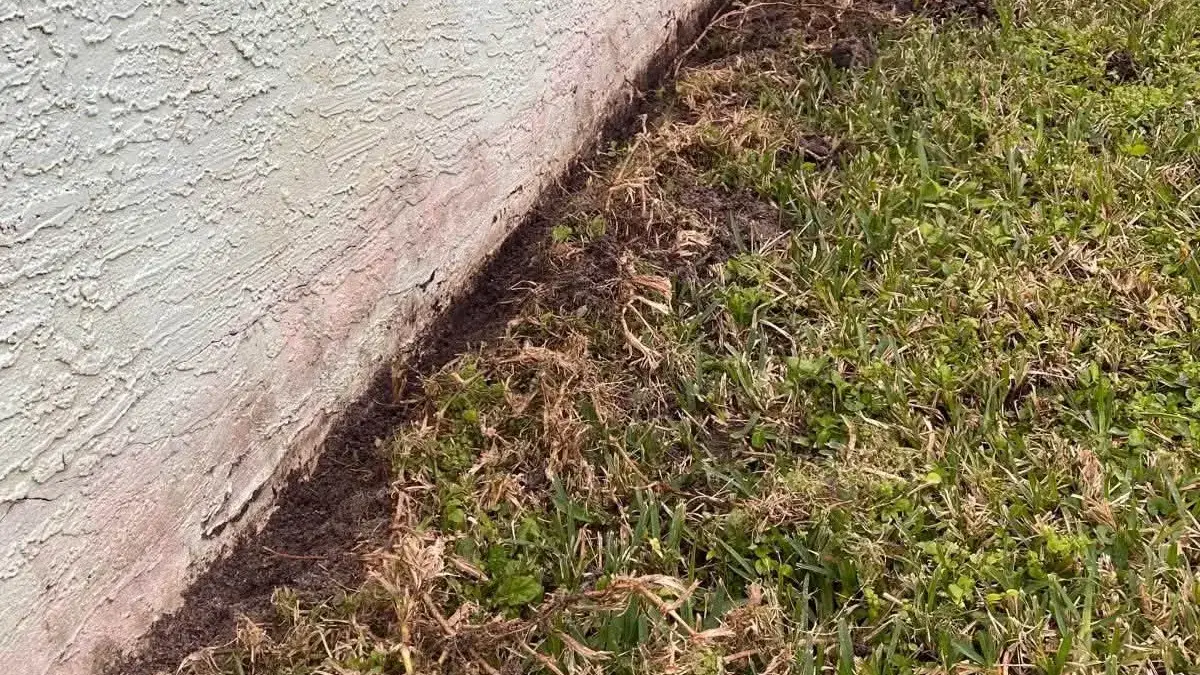
- Stucco cracking and crumbling along the bottom of the wall, near the ground or the driveway.
- Cracks that look damp for days after the rain has stopped.
- On the inside: stained or soft drywall, swollen trim, or a musty smell near an outside wall.
Any one of these is worth a look. Two or more together usually means water has been getting in for some time.
Will water go through stucco, and how does it get in on a Cape Coral home?
Stucco is not waterproof. It soaks up some water in every storm and dries out again, which is fine while the wall behind it is protected. Trouble starts when water gets in faster than it can dry, usually through a crack, a gap at a window or door, or a spot where the wall was never sealed properly.
On Cape Coral homes, these are the places we see water getting in most often:
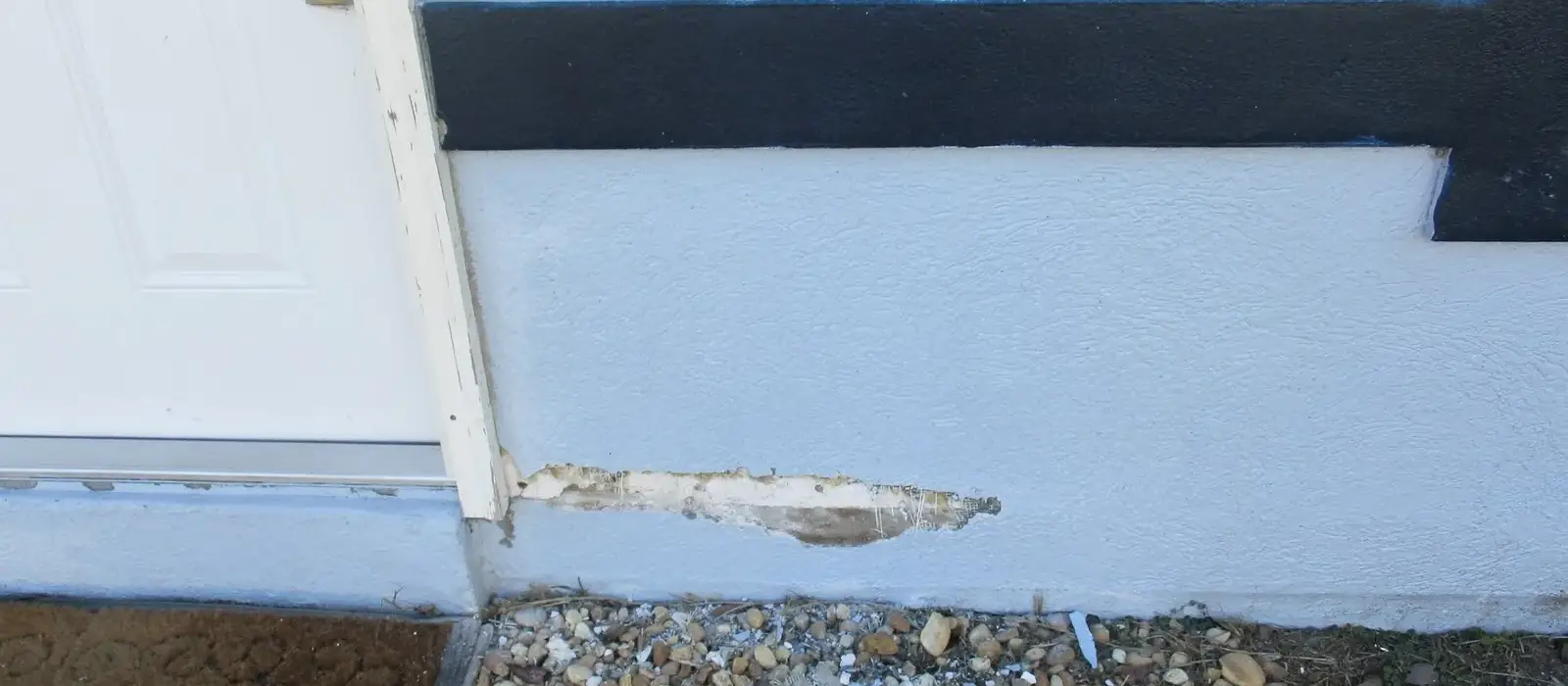
- Window and door corners, where stucco cracks first and the caulk around the frame has shrunk.
- Roof-to-wall joints, especially where a roof line meets a wall without a kick-out flashing to throw the water away from it.
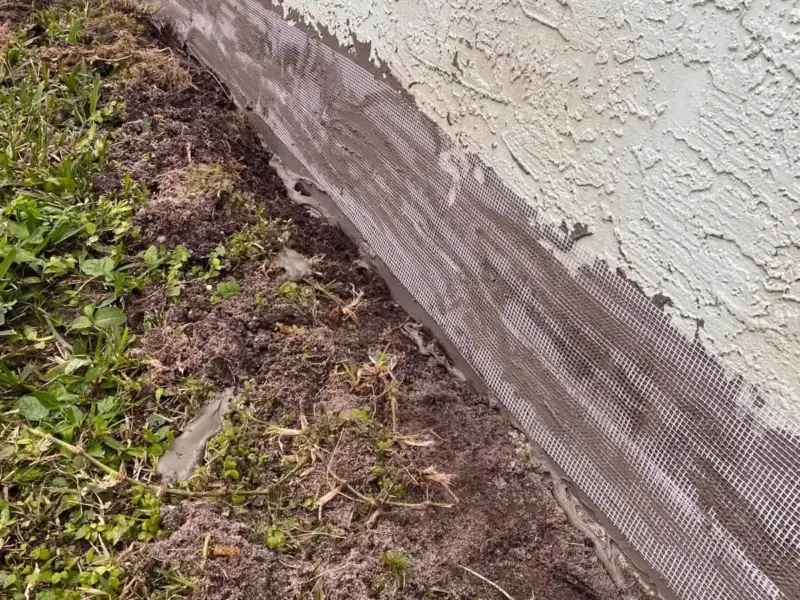
- The base of the wall at the weep screed, the metal edge at the bottom of the stucco, when soil, mulch or pavers are piled up against it.
- Lanai and pool cage fixings, where screws and brackets go through the stucco.
- Light fixtures, hose bibs, vents and pipes that pass through the wall.
- Frame additions on block houses, where wood framing sits behind the stucco instead of block and rots when it stays wet.
The weather makes it worse. The wet season runs from about May to October, with most of the rain falling from June through September, and the storms blow rain sideways into every gap. After a hurricane or a tropical storm, walls that held up for years can start leaking through cracks the wind opened.
How is water-damaged stucco repaired: opened, dried and rebuilt?
Water-damaged stucco is repaired by cutting out the damaged area, drying the wall behind it, replacing the lath and any rotted sheathing or framing, and then rebuilding the stucco coat by coat. The repair ends with matching the texture, painting, and sealing the spot where the water got in, so the same leak can’t happen again.
- Find the source. We trace the stains and soft spots back to where the water gets in. Fixing the stucco without fixing the entry point only moves the problem.
- Open the wall. We cut out the damaged stucco back to solid, dry material, so we can see how far the water has gone.
- Dry it out. The block or framing behind is left to dry before anything new goes over it.
- Replace what rotted. Rusted lath comes out and new lath goes in. On frame walls and additions, wet sheathing and rotted framing are replaced.
- Add a water barrier. New building paper or wrap goes behind the lath on frame walls, lapped so water runs out and down, not in.
- Rebuild the stucco. The coats go back on and cure, tied into the old stucco around the repair.
- Match and paint. We match the texture and paint the wall so the repair doesn’t show.
- Seal the entry point. Window corners, fixings, flashing and the wall base are sealed or corrected so the water stays out.
Can a water-damaged area be fixed without redoing the whole wall?
Usually, yes. Most water damage is local: under one window, along part of the wall base, or around one roof joint. We cut out only the damaged section, rebuild it, and blend it into the wall around it. A whole wall needs redoing only when the damage has spread across most of it or the stucco has let go of the wall everywhere.
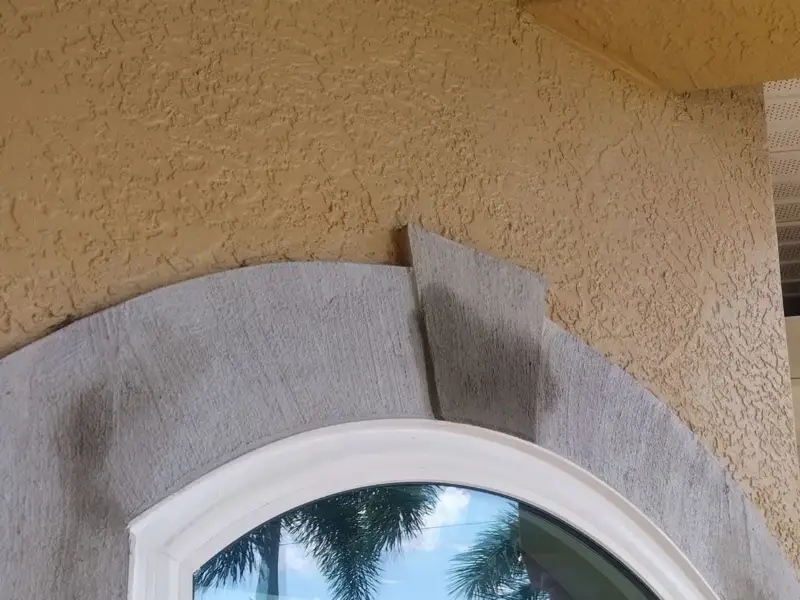
To keep the repair from showing, we match the texture of the stucco around it and paint the wall. On a faded wall, painting the whole side is often what makes the repair disappear. If the wall does need a full re-stucco, our stucco installation and re-stucco page explains how that job runs.
What water damage looks like on EIFS
Some newer Cape Coral and Fort Myers homes, and many commercial buildings, are finished in EIFS, a foam board covered with a thin synthetic stucco coat. Water that gets behind EIFS has a harder time drying out, so the damage often shows as soft or dented spots, bulges, or stains around windows. The repair is similar, but the foam and the mesh need EIFS materials. Our EIFS and Dryvit repair page covers it in detail.
When do I need a water restoration company instead of a stucco contractor?
Call a water restoration company first when water is inside your home: wet floors, soaked carpet, ceilings dripping or rooms that flooded in a storm. They dry out the house and deal with the inside. Call a stucco contractor like us when the problem is the outside wall: stained, soft, cracked or crumbling stucco, or a leak you can trace to the wall.
Many jobs need both, one after the other. The restoration company dries the house, then we fix the wall so the water doesn’t get back in. We don’t do mold remediation or indoor water cleanup. Our part is the wall.
Does homeowners insurance cover stucco water damage?
It depends on your policy and on what caused the damage. Policies often treat sudden storm damage differently from damage that built up slowly over years. We can’t tell you what your insurer will pay. What we can do is give you clear records of the damage to send them.
After a storm, we document the damage with photos and a written, itemised estimate you can give your insurer. Your adjuster and your policy decide what is covered. If you have already filed a claim, tell us when you call so the estimate shows what the adjuster will want to see.
Why this matters more in Cape Coral
Cape Coral is mostly block homes finished in stucco, and the city’s median home was built around 2000, according to the Census Bureau. Many of those homes are now past the age when the first sealant around windows and fixings starts to fail. Add salt air near the canals, the summer rains and the storms of hurricane season, and a small crack can let in a lot of water in one wet season.
The good news is that block walls handle water better than wood. Caught early, most water damage on a Cape Coral block home is a repair to the stucco and the lath, not the wall itself. The longer it waits, the more there is to open up.
What we look at on the visit
A water damage visit takes longer than a crack repair estimate, because the goal is to find the source, not just the stain. We walk the whole wall, not only the spot you called about, since water often travels along the inside of the wall before it shows.
- We tap and press the stucco around the damage to map where it is hollow or soft and where it is still sound.
- We follow stains up to the window, door, light or roof joint above them.
- We look at the sealant around windows and fixings, and at any flashing where a roof meets the wall.
- We check the bottom edge of the wall for buried weep screed, sprinkler spray and soil piled against the stucco.
- We ask what you have seen inside: damp drywall, swollen trim or a musty smell near that wall.
Then we explain what we think is behind the stucco and how much of the wall needs opening. The written estimate covers the repair, the paint, and the fix for the entry point.
Block walls and frame additions
Most Cape Coral houses are concrete block, and block itself doesn’t rot. On a block wall, water damage usually means rusted lath, stucco that has let go of the block, and crumbling at the base. The repair is to the stucco layers. Frame additions, second storeys and some garages are different: wood sits behind the stucco there, and wood that stays wet rots. On those walls we expect to replace sheathing and sometimes framing, so the estimate allows for it.
What does stucco water damage repair cost?
The price depends on how much of the wall is damaged, what is behind it, and how high it is. Hidden water is the biggest swing in any stucco job, because nobody knows exactly how far it has gone until the wall is opened. Our stucco repair cost guide shows typical ranges for water-damaged stucco and explains what moves the price.
Estimates are free. We look at the stains, soft spots and cracks, tell you what we think is behind them, and give you a written price before any work starts. If opening the wall shows more damage than expected, we stop and talk to you before going further.
How to keep water out after the repair
- Keep soil, mulch and pavers below the weep screed at the bottom of the wall.
- Point sprinklers away from the walls.
- Have small cracks sealed before each rainy season instead of after it.
- Keep gutters clear and make sure downspouts carry water away from the house.
- Look at window corners and wall fixings after any big storm.
Seeing stains, soft spots or bubbling paint? Call us or request a free quote. We’re a licensed and insured stucco contractor serving Cape Coral, Fort Myers, Lehigh Acres and North Fort Myers, and we can usually tell a lot from a photo of the wall. If the stucco is cracked but dry, our stucco crack repair page may be all you need, and our home page covers every other kind of stucco repair we do.
Last updated