On this page
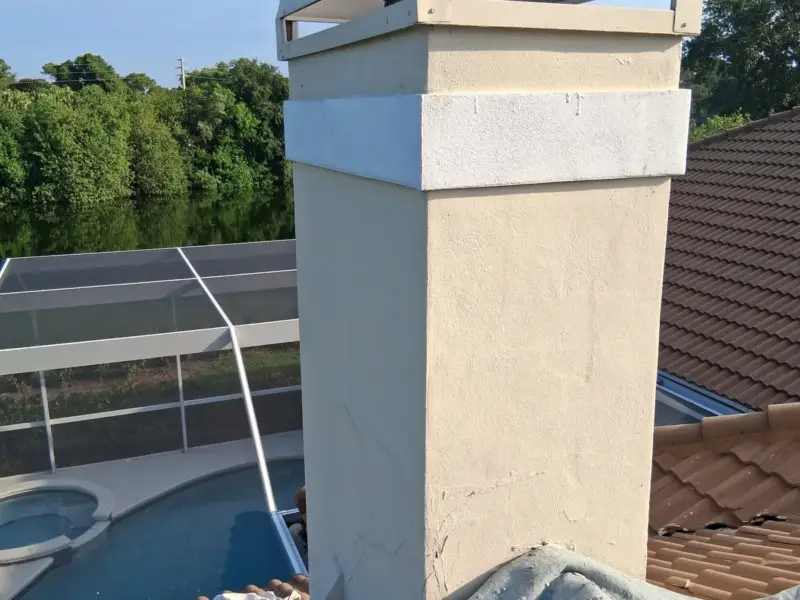
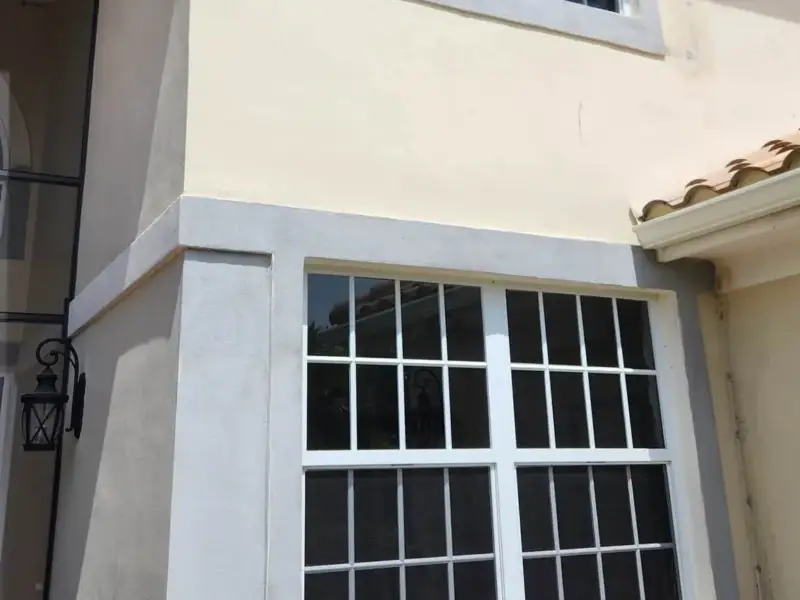
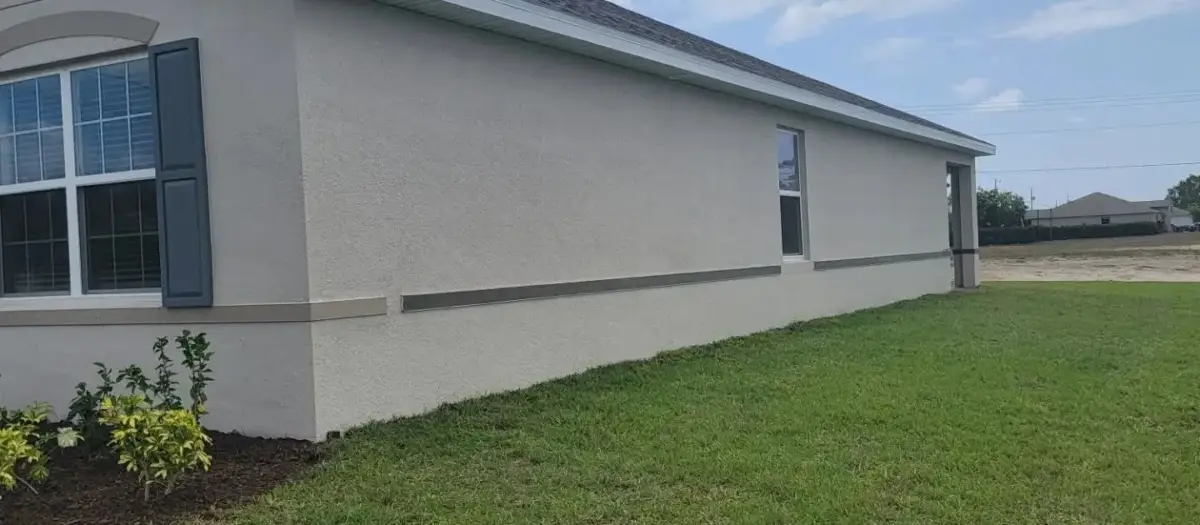
Stucco installation covers every job where new stucco goes on a wall, not just a patch. That means stucco over new block walls, stucco on additions, garden walls and columns, and full re-stucco of walls that have worn out. Installation of stucco is how Cape Coral homes are finished in the first place: stucco straight over concrete block, with foam trim and banding around the windows. When a wall has more patches than original finish, or the stucco has let go of the block, a new coat is often the better fix.
We take on new stucco, re-stucco and additions, and we paint the finished wall too. The site leads with repair because most walls can be saved, but when a wall can’t, we’ll tell you and quote the new stucco instead.
Is stucco a good finish for exterior walls in Florida?
Yes, which is why so many Florida homes use it. Stucco over concrete block stands up to heat, sun, humidity and hard rain, it doesn’t rot, and it can last for many decades with basic care. Its weak points are cracks and the joints around openings, so the finish only works well when those are kept sealed.
Block and stucco also suit hurricane country. The block wall does the structural work and the stucco protects it. That is the standard way most Cape Coral homes are built, and new stucco is the natural finish for an addition or a new wall on a block house.
Stucco over block, and lath and stucco
On concrete block, stucco usually goes straight onto the block, often after a bonding coat, in two coats: a base coat to fill and level the wall, then a finish coat. On wood framing, foam or other surfaces stucco can’t grip, the wall first gets a water barrier and metal lath, then three coats: the scratch coat, the brown coat and the finish. That lath and stucco system is what you’ll see on many additions and second storeys.
Knowing which your wall has matters for a re-stucco. A block wall can take new stucco once the loose old stucco is removed. A framed wall needs its water barrier and lath checked, because water damage behind them has to be fixed before new stucco goes on.
Can new stucco go over the old stucco?
Often, yes. If the old stucco is still firmly attached to the wall and sound, it can be cleaned, patched and coated with a new skim coat or finish coat. If the old stucco is hollow, soft, or full of failed patches, it has to come off where it has let go, or the new coat will fail with it. We tap and check the whole wall before deciding.
When is re-stucco better than painting or patching?
Re-stucco is the better choice when a wall has large hollow or soft areas, so many old patches that the texture no longer matches, widespread cracking, or old water damage behind it. Painting suits sound stucco that is just faded. Patching suits a few cracks or holes in an otherwise sound wall. Each costs more than the one before it, so we only recommend what the wall needs.
- Paint: the stucco is sound and the only problem is colour or chalky, faded paint.
- Patch and paint: a few cracks or holes, with sound stucco around them.
- Re-stucco a section: one wall or one area has failed, the rest is fine.
- Re-stucco the house: the stucco has failed in many places, or the texture is a patchwork of old repairs.
If you’re dealing with a few cracks, our stucco crack repair page is the place to start. If there are stains and soft spots, read about stucco water damage repair first, because a wet wall has to be fixed before it is re-stuccoed.
Which finishes can you match: smooth, sand or dash?
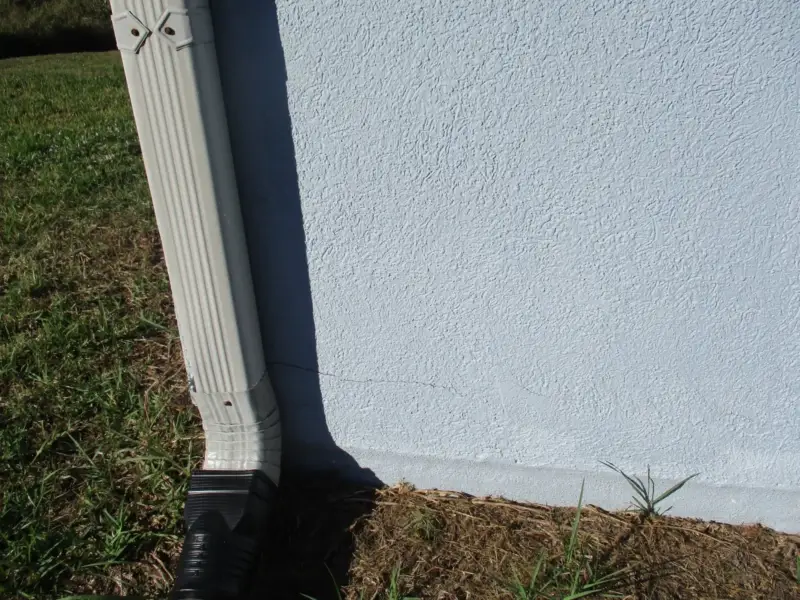
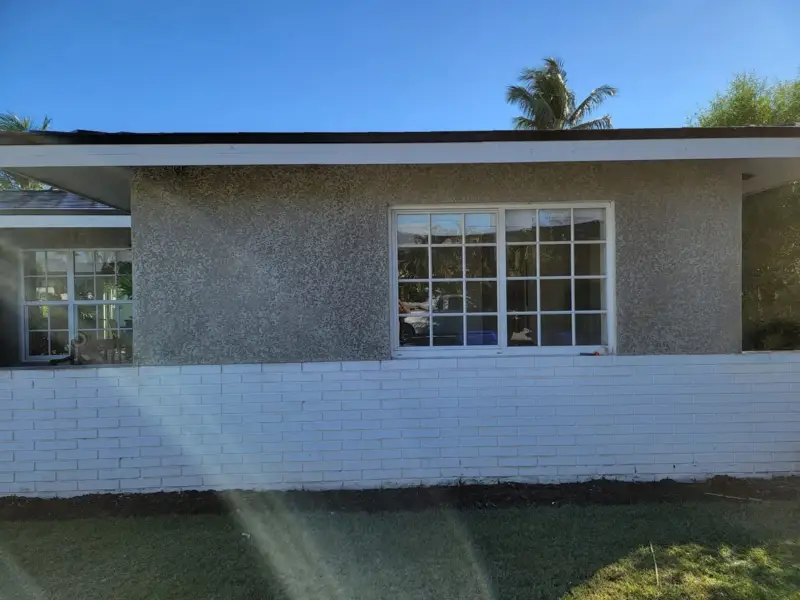
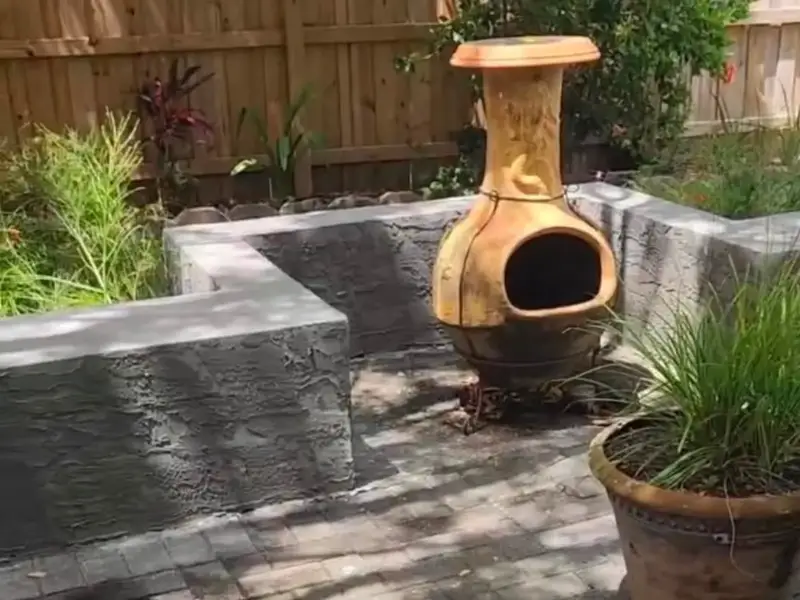
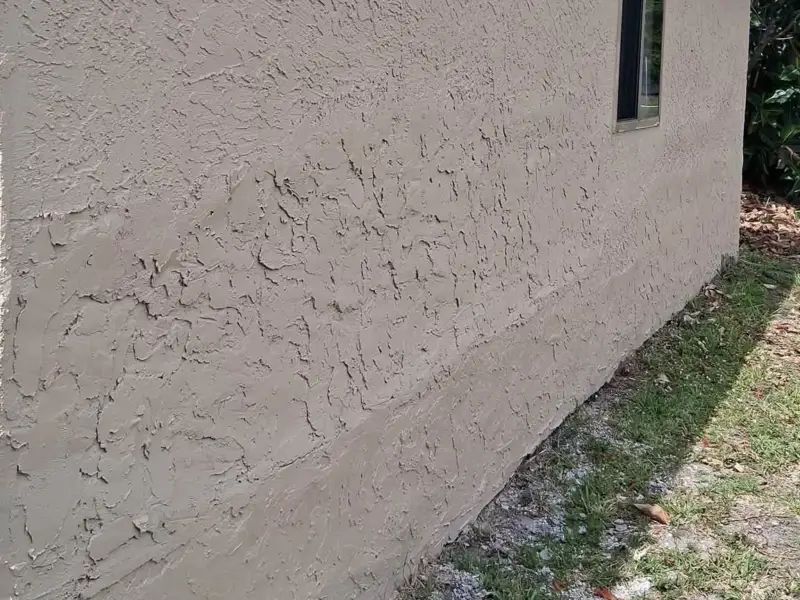
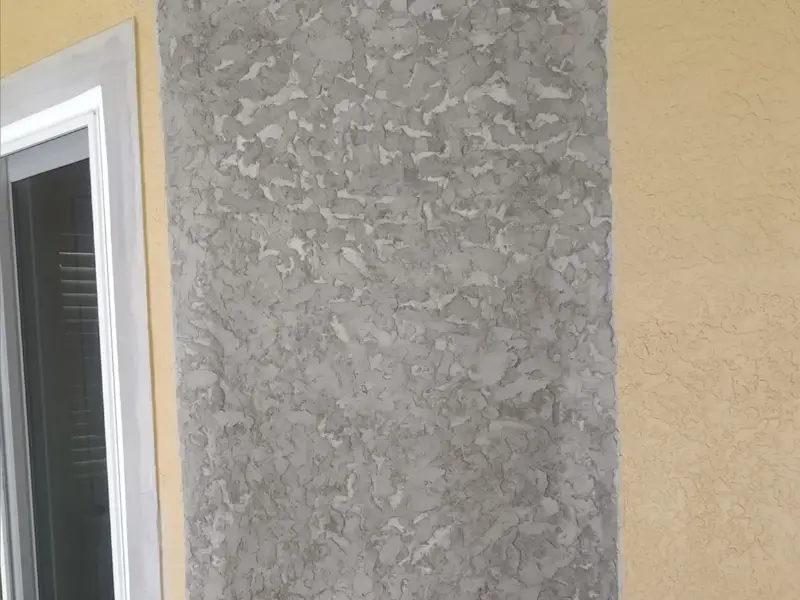
We match all three, plus heavier hand textures. A sand finish is the most common on Cape Coral homes and the easiest to blend. Smooth finishes take the most care. Dash and hand textures are matched by eye with a test patch. On a full re-stucco you can keep your current texture or change it.
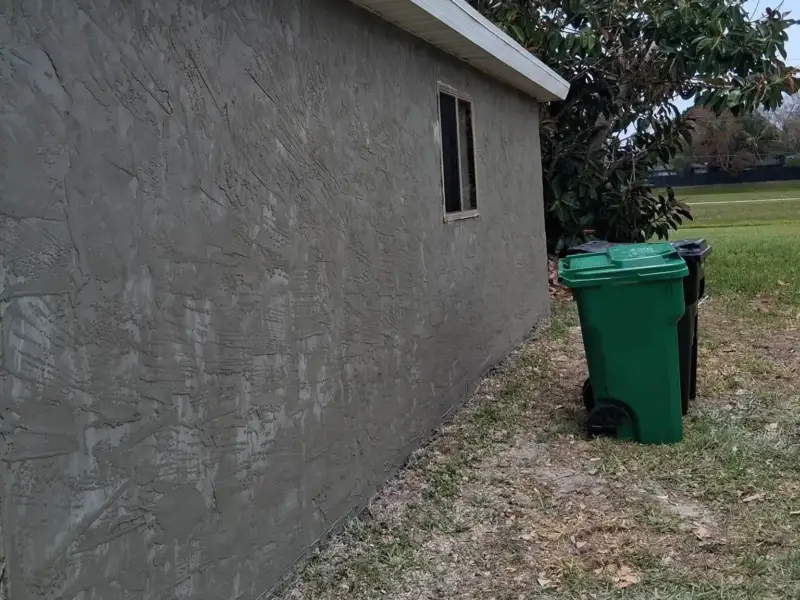
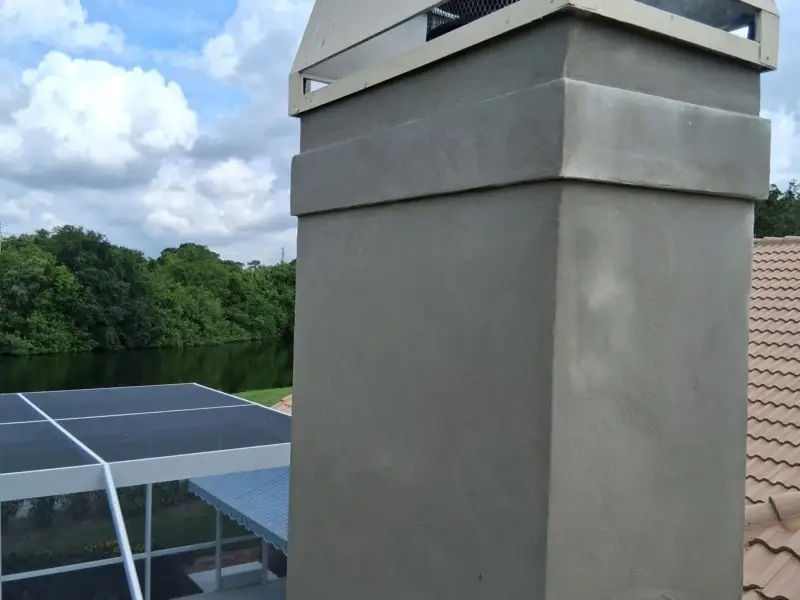
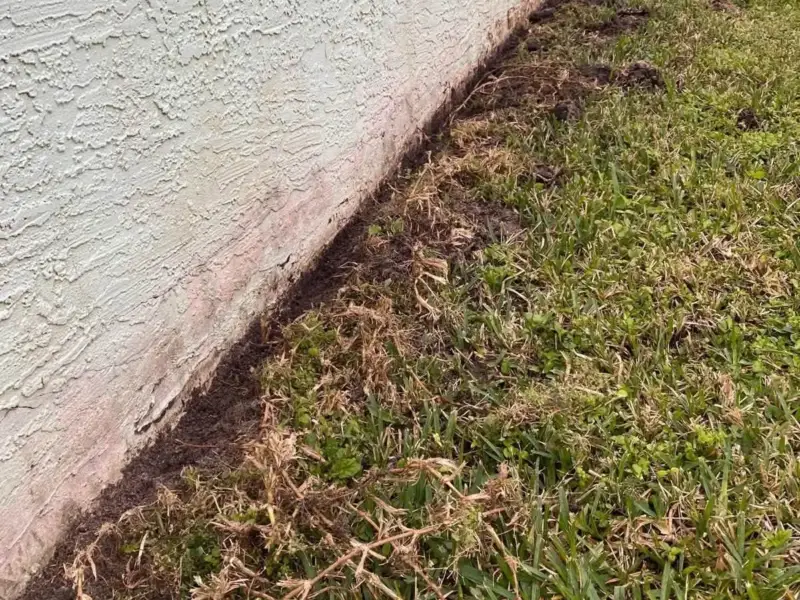
The photos further down this page show the three main finishes. When we re-stucco part of a house, we match the texture of the walls around it and then paint, so the new section doesn’t stand out.
How a re-stucco or new stucco job runs
- Look at the wall. We tap and check it, find any water damage, and agree the finish and colour with you.
- Protect the house. Windows, doors, plants, pavers and the pool area are covered.
- Remove what has failed. Loose and hollow stucco comes off, and damaged lath or trim is replaced.
- Prepare the surface. Block is cleaned and given a bonding coat. Framed areas get a water barrier and new lath.
- Base coats. The base or scratch and brown coats go on and are left to cure.
- Trim and banding. Foam trim, banding and window surrounds are set and coated.
- Finish coat. The finish goes on in the texture you chose.
- Paint and clean up. Once the stucco has cured, we paint it and clear the site.
Additions, new walls and columns
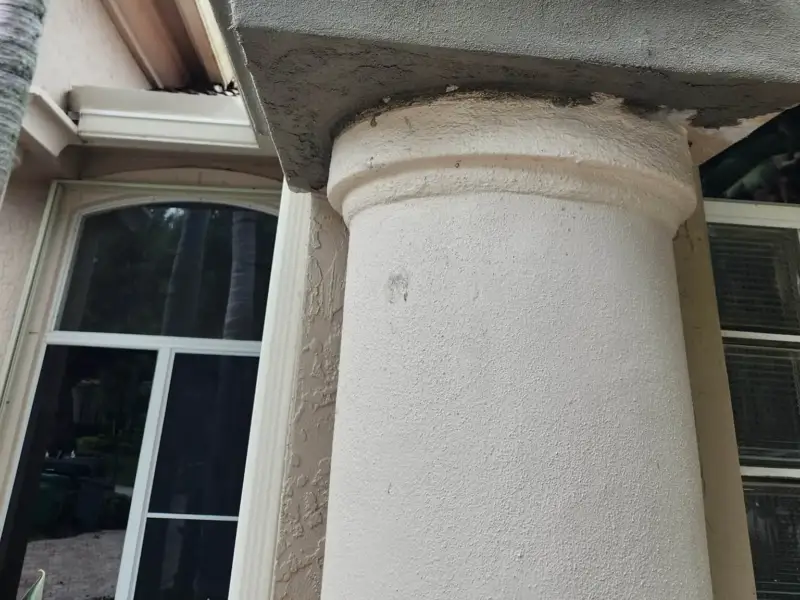
New block on an addition, a garden wall, a new garage bay or a column all need stucco to match the house. The trick is getting the new stucco to look like it was always there. We match the texture of your existing walls, carry the trim and banding lines across, and paint the new and old walls together so the colour is even.
Planning more than new stucco, like an addition with new rooms? Our general contractor page covers projects we manage from permit to final paint. Homeowners planning an addition can read how we work on a house on our residential stucco contractors page.
Permits and timing
Some stucco work needs a building permit in Cape Coral and some doesn’t, depending on the size and the type of job. We’ll tell you if your job needs a permit. You can also read about permits on the City of Cape Coral Permitting Services page. Stucco cures most evenly in steady weather, so big jobs are easier to schedule in the dry season, though we work all year.
How much does it cost to stucco a house in Florida?
New stucco and full re-stucco are priced by the square foot of wall, and the total depends on how much old stucco comes off, whether the wall needs lath, the height and access, the trim, and the finish. Our stucco repair cost guide shows typical ranges for new stucco and re-stucco, including a whole house. Your estimate is free and in writing.
Ready to plan it? Call us or request a free quote. We’re a licensed and insured stucco contractor for Cape Coral and the towns around it. If your walls are foam-backed, see EIFS and Dryvit repair instead, and for smaller jobs see our Cape Coral stucco repair page.
Last updated