On this page
EIFS repair is a different job from regular stucco repair. EIFS, short for Exterior Insulation and Finish System, is a layer of foam board covered with a mesh-reinforced base coat and a thin synthetic finish. Dryvit is one of the best-known brands of it, so many people call any EIFS wall Dryvit. When it cracks, dents or lets water in, it needs EIFS materials and EIFS methods. A cement stucco patch on EIFS cracks and falls off.
We handle EIFS repair and Dryvit repair on homes and commercial buildings around Cape Coral and Fort Myers, from a single hole to whole sections of wall. Repairing EIFS properly means cutting back to sound foam, rebuilding the layers in the right order, and then recoating or painting the wall so the repair blends in.
Is EIFS the same as stucco, and how do I tell which my house has?
No. Traditional stucco is a hard cement coat, about 3/4 of an inch thick, over block or metal lath. EIFS is foam board with a thin acrylic coat on top. The quickest way to tell is the tap test: knock on the wall with your knuckle. Hard-coat stucco sounds solid and feels like concrete. EIFS sounds hollow and feels slightly soft.
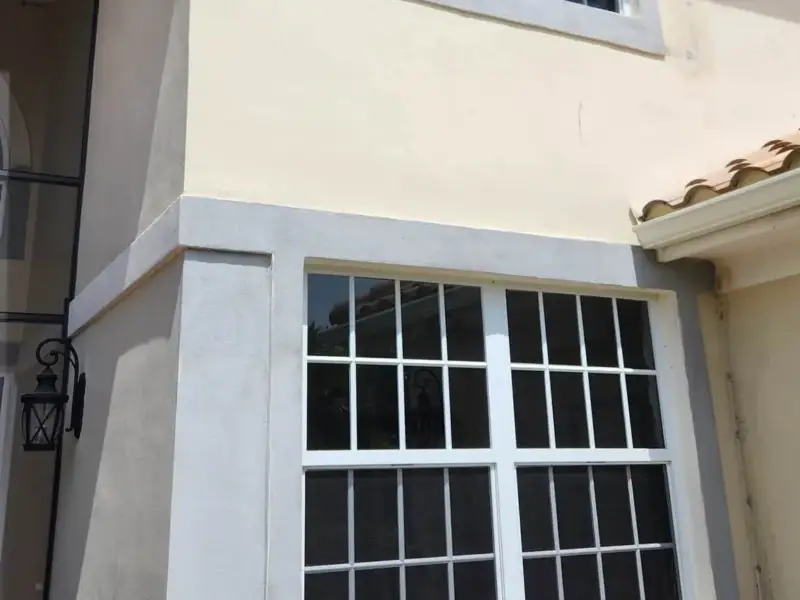
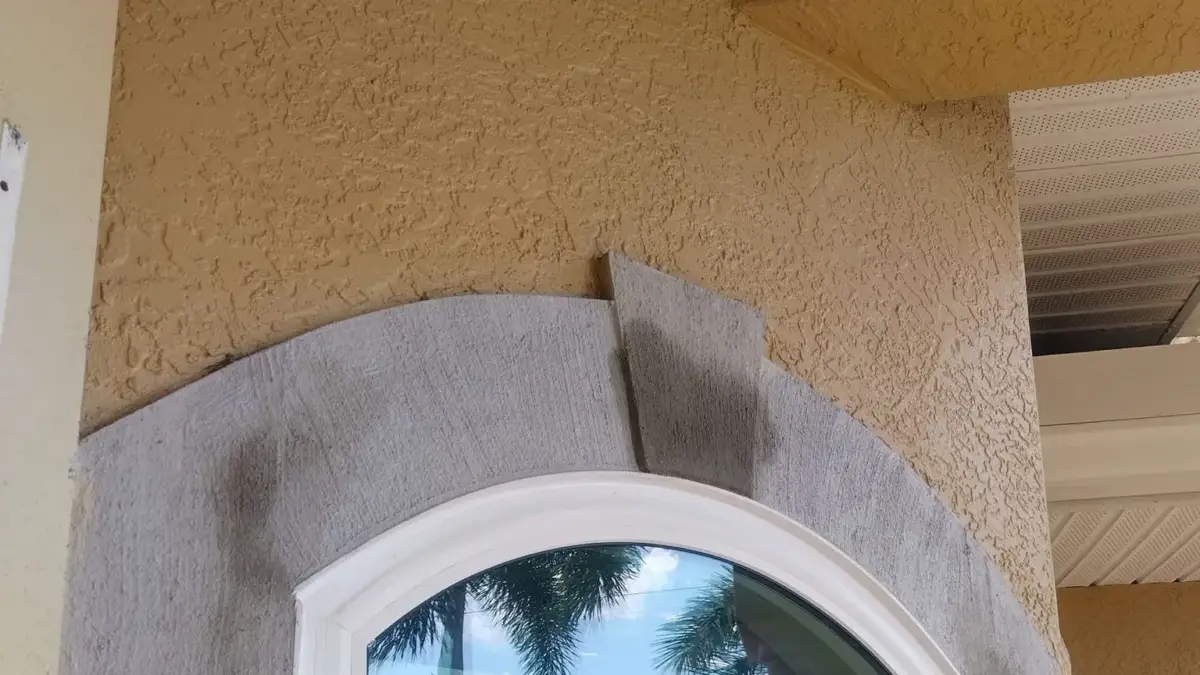
A few other clues help. Press firmly with your thumb: EIFS may give a little or dent, and stucco won’t. Look at the edges where the wall meets a window, a light or the ground. On EIFS you can sometimes see the foam board at a damaged edge. Thick, shaped trim, banding and arches are often foam too, even on a hard-coat house, like the foam arch over a window in the photo above.
Most Cape Coral homes are block with hard-coat stucco. EIFS turns up more on newer homes, on second-storey walls and additions, on foam trim and banding, and on commercial buildings. Some houses have both.
Can EIFS be repaired, or does it need replacing?
Most EIFS damage can be repaired. Holes, cracks, impact dents and small soft spots are cut out and rebuilt with new foam, mesh, base coat and finish. Replacement is only needed when water has damaged a large part of the wall or the sheathing behind it, so the foam no longer holds to the building. Even then, it is often one section, not the whole house.
What does water behind EIFS look like from outside?
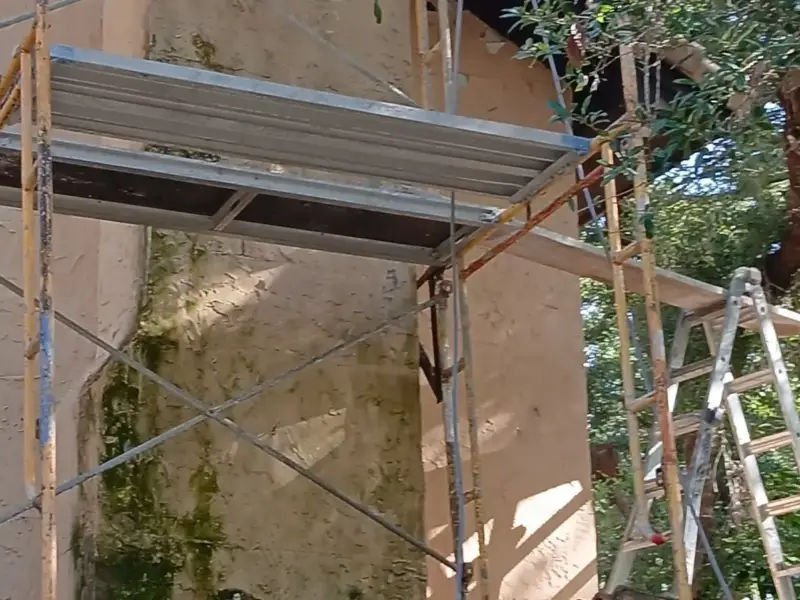
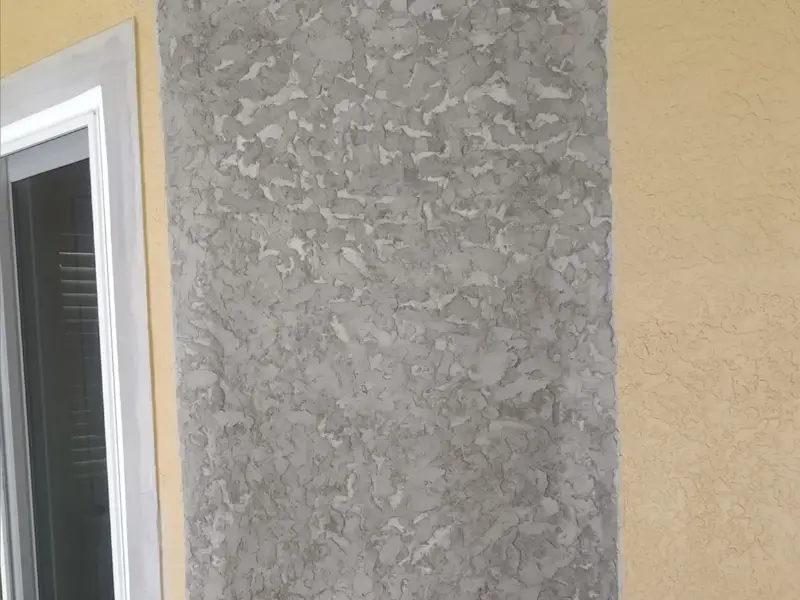
Water behind EIFS shows up as stains running down from window corners, soft or spongy spots, bulges, cracks along the foam board joints, and finish that peels or blisters. Because the foam doesn’t let water drain or dry quickly, damage behind EIFS can spread further than it looks before it shows on the surface.
Cape Coral’s wet season makes this a real concern. From about May to October, heavy storms drive rain against the walls for months. On older barrier EIFS, the kind with no drainage space behind the foam, water that gets in at a window or a joint has nowhere to go. If you see stains or soft spots, have the wall looked at before the next rainy season, and read our stucco water damage repair page for how wet walls are opened and rebuilt.
How we repair EIFS and Dryvit
- Find the damage. We tap and press the wall around the problem to find where the EIFS is sound and where it isn’t.
- Cut it back. The damaged finish, mesh and foam are cut out back to dry, solid material. If the sheathing behind is wet or rotted, that comes out too.
- Fix what’s behind. Wet sheathing is replaced, and any water barrier is repaired before new foam goes in.
- New foam. A piece of foam board is cut to fit, set in place and rasped flush with the wall around it.
- Mesh and base coat. Reinforcing mesh is set into the base coat and lapped over the edges of the old EIFS, so the repair is tied into the wall.
- Finish to match. The finish coat goes on in a texture that matches the rest of the wall.
- Seal and recoat. Joints at windows and fixings are sealed, and the wall is recoated or painted so the colour matches.
Our crew paints as well, so the repair, the recoat and the colour match happen as one job.
Can you recoat EIFS?
Yes. EIFS can be recoated with a new acrylic finish or painted with a coating made for EIFS, once the cracks, holes and soft spots are repaired. A recoat freshens faded walls and hides old repairs. It doesn’t fix water damage, so any wet or soft areas have to be cut out and rebuilt first.
How often does EIFS need maintenance in Florida?
Plan to look over your EIFS walls once a year, ideally before the rainy season, and after any big storm. The sealant around windows, doors and fixings usually needs redoing every several years, sooner on walls that face the afternoon sun. Catching a split joint or a small crack early keeps a repair small.
- Look for cracks, dents and stains, especially below windows and at corners.
- Check the sealant around windows, doors, lights and pipes for gaps or shrinking.
- Keep sprinklers off the walls and soil away from the bottom edge of the EIFS.
- Have impact damage, like a dent from a ladder or a lawn mower, repaired before it lets water in.
EIFS on commercial buildings
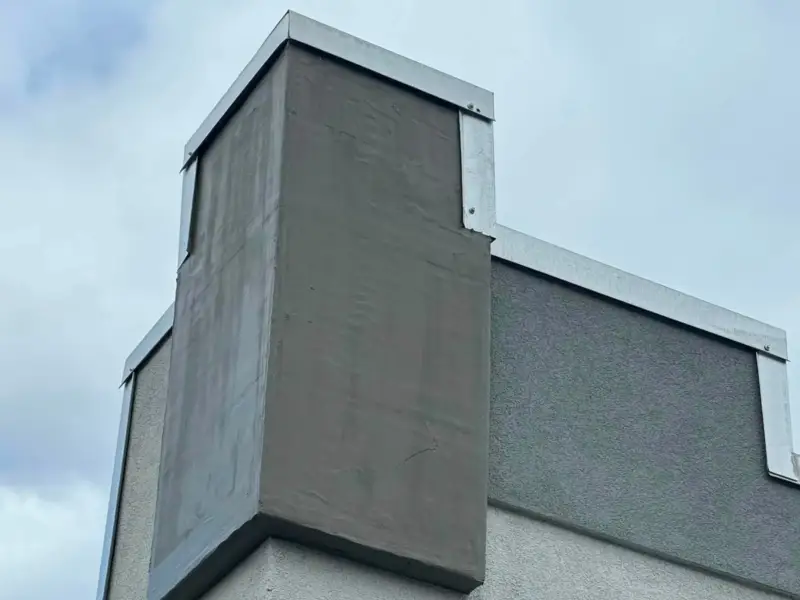
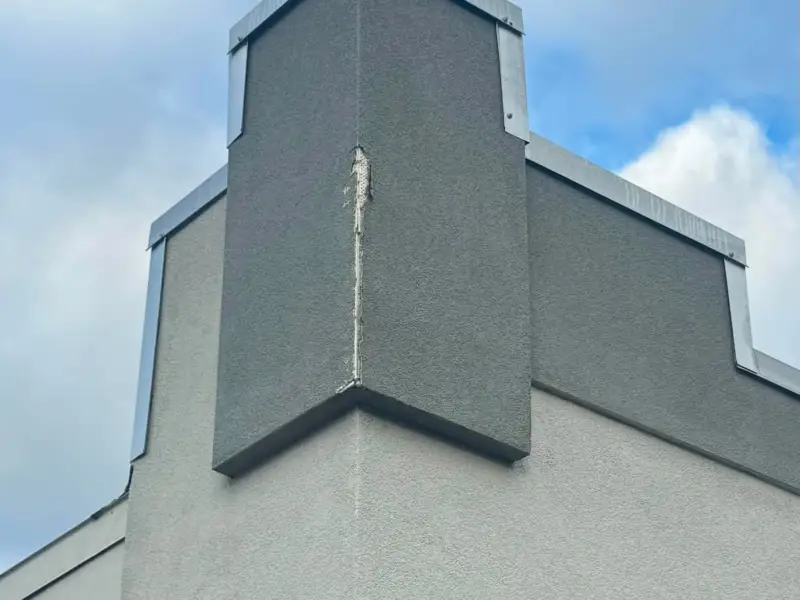
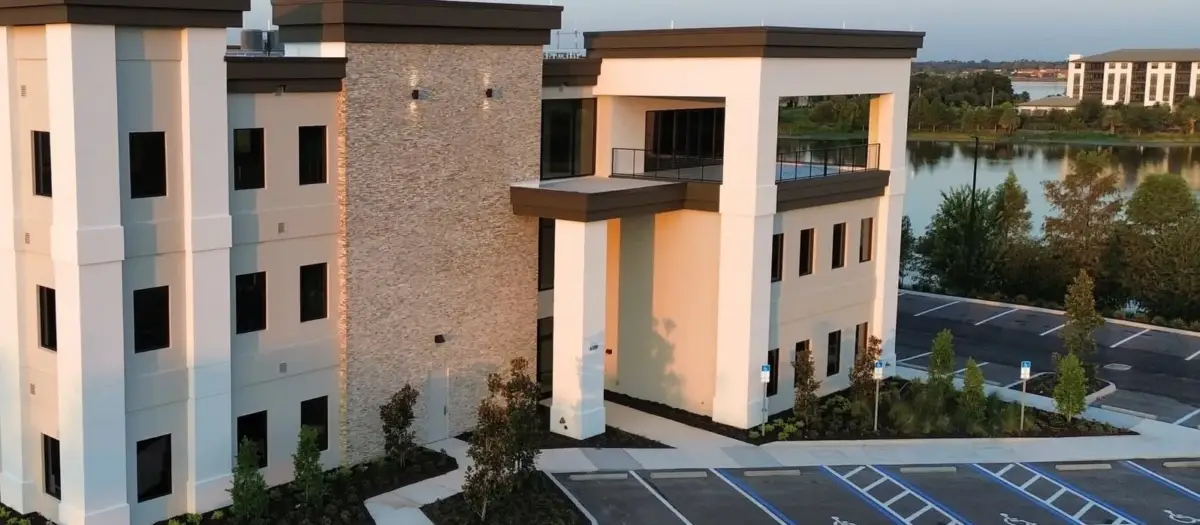
A lot of offices, shops and condo buildings in Lee County are finished in EIFS, with banding, cornices and shaped trim like the building in the photos on this page. We repair EIFS on commercial buildings too, from impact damage at ground level to cracked banding and failed joints higher up. Tell us about access and working hours when you call, and we’ll plan the job around them. Our commercial stucco contractors page explains how we run jobs on offices, shops and condo buildings.
What does EIFS repair cost?
EIFS repair usually costs more per square foot than hard-coat stucco repair, because of the foam, the mesh and the finish, and because hidden water is more common behind it. Our stucco repair cost guide shows typical ranges and explains why. Estimates are free and come in writing.
If your walls have hard-coat stucco instead, see stucco crack repair or stucco installation and re-stucco. Not sure which you have? Text us a photo, or request a free quote and our licensed and insured stucco contractor crew will tell you on the visit. For hard-coat walls, our stucco repair in Cape Coral page is the place to start.
Last updated